
Vehicle Accessories Buying Guide
Learn how to evaluate vehicle accessories by fit, safety, installation, material quality, maintenance and the real ownership problem each product is intended to solve.
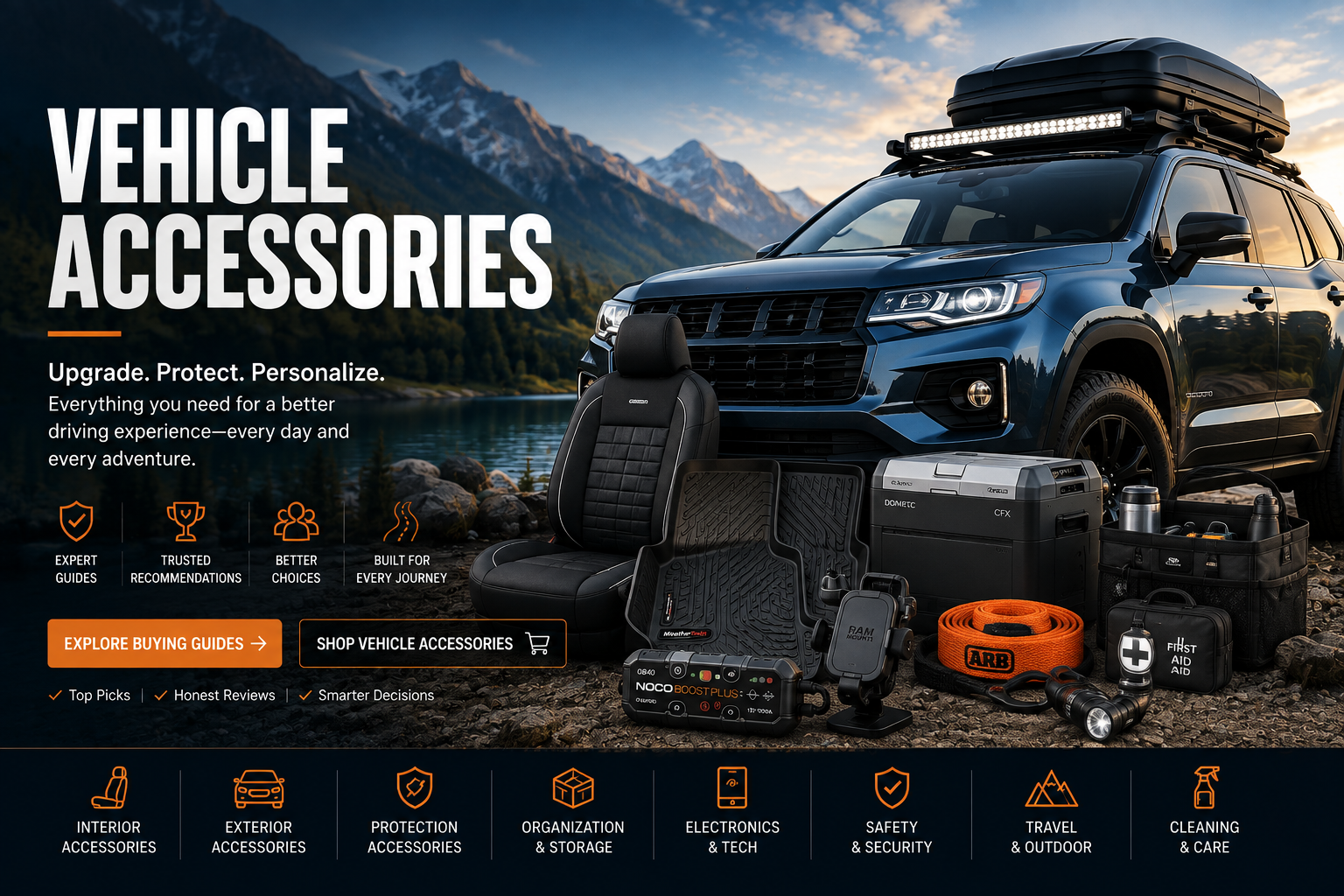
Browse Vehicle Accessories
Use the guide below to narrow the right category, then compare current options from trusted retailers.
Choose vehicle accessories by starting with a specific problem, verifying exact vehicle compatibility and checking whether installation affects airbags, pedals, visibility, sensors or controls. Prioritize secure fit, durable materials and easy maintenance over unnecessary features.
Choose the right option for your vehicle
Browse the hub by the part of the vehicle or ownership need that matters most.
Define the Need
Protection, comfort, storage, safety or utility.
Verify Fit
Model year, trim, dimensions and mounting points.
Check Safety
Airbags, pedals, sightlines, sensors and securement.
Review Installation
Tools, drilling, wiring and reversibility.
Compare Materials
Heat, moisture, UV, abrasion and corrosion resistance.
Plan Maintenance
Cleaning, inspection and replacement parts.
Judge Value
Useful life, warranty and total ownership cost.
Compare Categories
Move from needs to the correct product type.
Featured buying paths
High-interest categories where fit, materials and installation make a major difference.
Floor Mats & Seat Covers
Protect expensive interior surfaces before adding convenience accessories.
Read guide →Phone Mounts & Organizers
Improve access and storage without increasing distraction.
Read guide →Cargo & Protection Gear
Confirm vehicle ratings and mounting compatibility.
Read guide →Find the best fit for how you drive
Editor’s starting points
Before Buying
- Confirm vehicle year and trim
- Measure available space
- Read installation instructions
- Check return conditions
During Installation
- Protect painted surfaces
- Keep airbags and controls clear
- Use rated attachment points
- Test movement and clearance
After Installation
- Recheck fasteners
- Watch for rubbing or movement
- Clean as directed
- Replace damaged components
A practical framework for choosing vehicle accessories
The accessory market is broad, but the decision process can remain simple: identify the problem, verify compatibility, evaluate safety and installation, then compare materials and ownership cost.
Compatibility includes more than make and model. Trim level, seat layout, body style, factory options, sensors, roof rails, hitch class, electrical connectors and mounting points can all change fit.
Prioritize compatibility and real use
Safety deserves priority whenever an accessory sits near airbags, pedals, steering, windows, mirrors, cameras, lights or passenger space. A useful accessory must not interfere with the vehicle’s intended operation.
Evaluate installation and operation
Installation can range from a removable mat to permanent wiring or drilling. Consider whether professional installation is appropriate and whether the modification could affect warranties, leased-vehicle requirements or resale.
Plan for maintenance and long-term support
Value is not the lowest price. A product that fits correctly, lasts longer, cleans easily and has replaceable hardware may cost less over time than repeated low-cost replacements.
Ready to compare current options?
Browse available vehicle accessories buying guide after reviewing the compatibility, installation and buying guidance above.
Featured comparisons
Universal vs Vehicle-Specific
Compare price, coverage, finish and installation.
Read comparison →Temporary vs Permanent Accessories
Compare reversibility, security and complexity.
Read comparison →Soft Goods vs Molded Products
Compare comfort, structure, cleaning and durability.
Read comparison →Budget vs Premium Accessories
Compare useful life, warranty, parts and actual need.
Read comparison →Popular brands for vehicle accessories buying guide
Brand hubs will connect product families, comparisons, reviews and buying guides.
Ownership and setup guides
How to Verify Vehicle Compatibility
Use year, make, model, trim and option details.
Read guide →How to Read Load Ratings
Follow the lowest vehicle or accessory limit.
Read guide →How to Protect Airbag Areas
Keep covers and mounted items out of deployment zones.
Read guide →How to Evaluate Installation Difficulty
Identify tools, wiring and permanent changes.
Read guide →How to Compare Warranties
Review duration, exclusions and replacement process.
Read guide →How to Plan Internal Accessory Maintenance
Schedule cleaning, fastener and wear checks.
Read guide →Related RideGearGuide hubs
Vehicle Accessories Buying Guide FAQ
What vehicle accessories should I buy first?
Start with accessories that solve a repeated problem, such as floor protection, secure storage, visibility or roadside preparedness.
How do I know whether an accessory fits my vehicle?
Verify year, make, model, trim, dimensions, mounting points and any relevant factory options.
Are universal accessories safe?
They can be, but only when they fit securely and do not interfere with safety systems or vehicle controls.
Should accessories be professionally installed?
Professional installation is appropriate for complex wiring, structural mounting or work near safety systems.
How can I avoid low-value accessories?
Prioritize products that solve a clear need, fit correctly, use durable materials and are easy to maintain.
Ready to Explore Vehicle Accessories Buying Guide?
Use this guide to narrow the right type, then compare available vehicle accessories buying guide from trusted retailers.
Browse Vehicle Accessories Buying Guide →RideGearGuide may earn a commission from qualifying purchases made through affiliate links. This does not change the price paid.